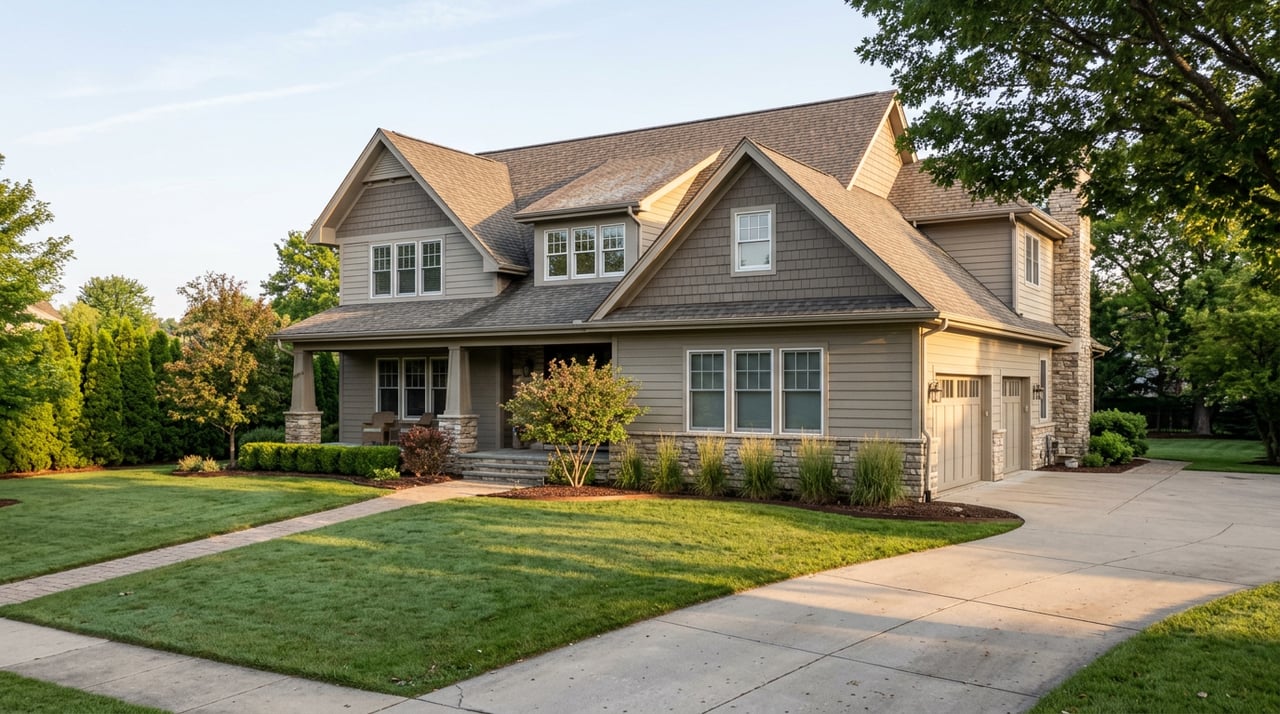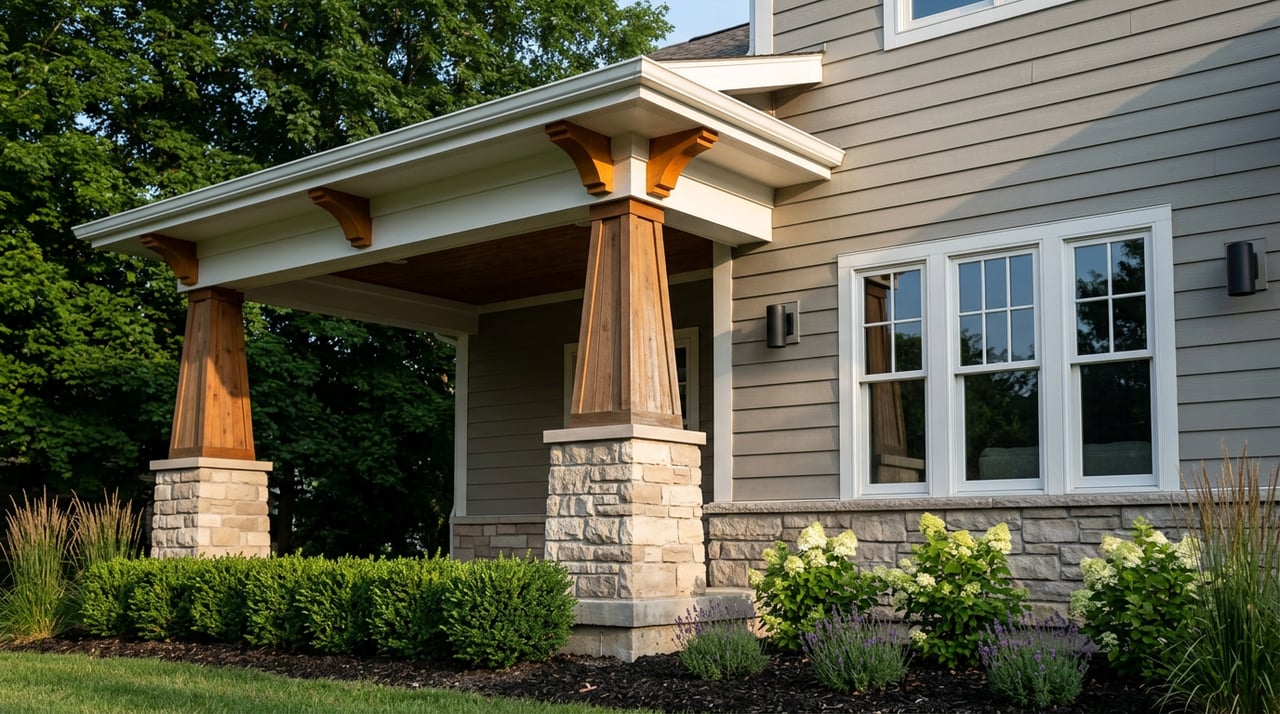
Open any national portal and Eagle looks like a single market with a single number. Altos and Build Idaho pegged the median list price at $1,045,000 as of June 10, 2026. Redfin's trailing three months ending May 2026 showed a median sale price closer to $799,000. Zillow's home value index put the typical value near $809,000 and flagged a double-digit year-over-year drop. Three respected sources, three different stories.
The gap is the story. Eagle is a small, luxury-skewed market where a handful of foothill estates pull the list side up and steady-selling family homes anchor the sale side down. Underneath that headline number sit five sub-markets with different product, different price ceilings, and, for two of them, a property-tax overlay that portal listings do not surface. If you are moving from Seattle, Los Angeles, or the Bay Area — the three metros Redfin identified as Eagle's top inbound searchers in the first quarter of 2026 — the practical price you pay depends less on the median and more on which of these five Eagles you are shopping.
The line item most buyers find at closing
Two of Eagle's largest master-planned communities, Avimor and Valnova, sit inside a Community Infrastructure District. A CID under Idaho Code Title 50, Chapter 31 is a special taxing district that lets a developer front the cost of roads, water, and shared amenities, then recover it through an assessment collected and enforced the same way as property tax. That assessment does not appear on a listing page and often does not appear on a Zestimate. It does appear on the annual tax bill.
For a $400,000 home inside Avimor with the homestead exemption applied, the CID plan estimates roughly $1,151 per year in addition to the base property tax. In September 2024, KIVI reported on a new Avimor Assessment Area covering 337 planned housing units and 9 commercial pads, where the assessment on affected homes is set at $6,000 payable over 40 years. Existing Avimor owners outside the new Assessment Area were not pulled in.
The CID is not a scandal. It is a financing tool. But it is a tool that reshapes your monthly payment in a way the sale price never will, and it is the single most common piece of Eagle-specific friction our relocation clients discover after they have already made an offer.
Practical move: before you write an offer inside Avimor, Valnova, or any Eagle subdivision developed after 2010, pull the full parcel tax history from the Ada County Assessor and read the line items. A CID entry will be labeled as a special assessment, not folded into the general levy.
Why the list median and sale median disagree by a quarter million
The list price sits above the sale price in almost every market. The size of the gap is what matters. In Eagle, the gap right now is unusually wide, and it is not because sellers are stubborn.
| Metric | Value | Window |
|---|---|---|
| Median list price | $1,045,000 | Week of June 10, 2026 (Altos/Build Idaho) |
| Median sale price | $799,000 | 3 months ending May 2026 (Redfin) |
| Median sale price per square foot | $322, down 7.3% year over year | 3 months ending May 2026 (Redfin) |
| Days on market | 56 | 3 months ending May 2026 (Redfin) |
| Homes sold in May | 236 | May 2026 (Redfin) |
| Median listing size | ~2,946 sq ft, largest of any Treasure Valley ZIP | May 2026 (Realtor.com) |
Two things are happening at once. First, the sample is small. Eagle sold 65 homes in October 2025 by one count and 236 in May 2026 by another. When a market of that size takes on three or four foothill estates listed north of $2.5 million, the list-side median jumps. Second, buyers are pricing risk. Homes are still moving at 99.3% of asking on the closed side, so the cuts happen before contract, not at the closing table.
The takeaway for a buyer comparing Eagle to Meridian or Star: the sale median is the number that describes what you can actually own, and it is more stable than the weekly list feed suggests.
Five Eagles, and what a budget actually buys in each
Locals do not really talk about north and south Eagle. They talk about five areas defined by geography and product.
South (river corridor). The Boise River splits into a north and south channel through Eagle, and the river-adjacent subdivisions sit on the south side. Banbury Golf Course threads along the south channel and appears regularly in Golf Digest's Idaho rankings. Product here is a mix of established riverfront custom homes and newer river-access communities. Land and water access carry the premium.
East (foothill-edge, built-out). The east end of Floating Feather Road is a tree-lined corridor that dead-ends at Eagle Bike Park, home to a skate park, BMX track, dog park, and downhill trails. Neighborhoods like Lexington Hills built out in the late 1990s and early 2000s and are mostly stable resale. You are buying mature landscaping and immediate trail access, not new construction.
Central (downtown). The compact downtown grid around Heritage Park and State Street hosts the Saturday market during warmer months and Eagle Fun Days each June. Inventory here skews smaller and older, with a slow trickle of infill.
North (foothill and acreage). North Eagle runs the length of the city along the base of the foothills. Five-acre parcels with irrigation or water rights sit at the flat base of the hills, and true foothill lots climb from there. Water rights are the pricing hinge. Idaho's five-acre agricultural exemption can meaningfully reduce the tax bill if the owner leases the ground for hay or raises livestock, which is why so many acreage owners here do exactly that.
West (new construction). West Eagle is where most of the current builder inventory sits, in communities including Legacy, The Preserve, Riverstone, and Riverwalk. This is also the sub-area most affected by the ongoing Highway 16 expansion, which is shortening the commute west toward Emmett and reshuffling how west-side buyers weigh Eagle against Star.
The same $800,000 lands you very different homes across these five: a mid-size resale in East Eagle with a mature yard and no CID, a new-construction production home in West Eagle with a builder incentive and possible CID exposure, or a small acreage parcel at the base of the foothills where the house is modest but the land is the asset.
The tax math that changes the ranking
Eagle's headline levy is the lowest of the big Ada County cities. According to Idaho State Tax Commission certifications for the 2025 levy year, Eagle's primary code area total combined levy landed near 0.37% of taxable value, or about $3.67 per $1,000. Unincorporated code areas near Eagle ran roughly 0.25% to 0.35%. The Ada County urban average for 2025 was closer to 0.65%.
| City | 2025 combined levy (approx.) | Why |
|---|---|---|
| Eagle | ~0.37% | West Ada school district maintenance-and-operations levy near zero for 2025 |
| Meridian | ~0.51% | Same school district, additional city and highway obligations |
| Boise | ~0.92% | Boise School District still levying full M&O rate |
On a $900,000 assessed value with Idaho's homestead exemption applied at 50% of assessed value up to $125,000, the base bill difference between Eagle and Boise is meaningful, several thousand dollars per year. Layer a CID assessment on top in Avimor or Valnova and the math tightens back toward the Ada County average. That is the reason a low headline levy alone is not a reason to prefer one subdivision over another.
Two Eagle-specific deadlines worth calendaring:
- New construction buyers have 28 days from the assessment notice to apply for the current-year homestead exemption through the Ada County Assessor. Miss it and you pay the un-exempted rate for a full year.
- Assessment notices go out by the first Monday in June. Tax bills go out in November and are due December 20, with the option to split and pay the second half by June 20.
Who is setting the price
Redfin's migration data for January through March 2026 showed Seattle, Los Angeles, and San Francisco as the top three inbound metros searching Eagle. That mix matters. Buyers pricing an Eagle home against a Bellevue or Palo Alto comp are not the marginal buyer setting the sale median. They are the marginal buyer setting the list median, particularly on foothill acreage and river-adjacent estates. That is a large part of why the list-sale gap is as wide as it is right now. Sellers pricing to the coastal buyer take longer to find one, and closed sales continue at a more locally-anchored number.
Frequently asked
Do all Eagle new-construction subdivisions carry a CID assessment? No. The two large ones publicly identified with CID overlays are Avimor and Valnova. Legacy, The Preserve, and most of the older established communities do not carry a CID line. Always confirm by pulling the parcel tax history before writing an offer.
Is Eagle's price drop as bad as the Zillow index suggests? Zillow's home value index reported an 11.1% year-over-year decline as of May 31, 2026, while Redfin's closed-sales median was down 1.2% for the three months ending May 2026 and Houzeo's monthly reading was down less than a tenth of a percent. Different methodologies weight the small luxury tail differently. The closed-sales figure is the one that matches what buyers actually pay.
How does the Highway 16 expansion change the West Eagle calculus? It shortens the drive between West Eagle subdivisions and the I-84 corridor, and it changes the reference set. A Legacy buyer today is realistically comparing that home to newer Star inventory rather than to Central Eagle resale.
If you are shopping Eagle from out of state and want the actual tax bill and CID exposure pulled on any address before you write an offer, that is exactly the kind of pre-offer work Kent Davies and the LiveInBoiseID team do for every relocation client. Download My Free Relocation Guide to see the checklist we run through, or reach out directly and we will pull the parcel history on the first home on your list.