Thinking about moving to Boise but not sold on the idea of a big yard, a long to-do list, or a long commute? For many relocating professionals, condos and townhomes offer a practical middle ground: easier upkeep, more central location options, and a chance to own in parts of Boise that put you closer to downtown, the Greenbelt, and daily conveniences. If you want to understand where these homes are concentrated, what they typically cost, and how to decide if they fit your lifestyle, you’re in the right place. Let’s dive in.
Why attached homes appeal in Boise
If you are relocating for work, your housing priorities often look different than they would in a long-term suburban move. You may care more about convenience, flexibility, travel ease, and a shorter maintenance list than about having a large lot. That is where Boise condos and townhomes often stand out.
Attached homes can give you a lower-maintenance ownership option while still keeping you in the ownership market. In Ada County, Boise Regional REALTORS reported November 2025 median prices of $419,900 for condos and $402,950 for townhomes, while the February 2026 Ada County median sales price for single-family homes was $538,000. That does not mean every condo or townhome is cheaper than a house, but it does show why many buyers start here.
At the same time, Boise’s attached-home market is smaller and more location-sensitive than its detached-home market. Redfin currently shows 67 condos for sale with a median listing price of $425,000 and 89 townhouses with a median listing price of $529,000. That smaller inventory means the right fit can depend heavily on neighborhood, building style, and HOA structure.
Where Boise condos and townhomes cluster
In Boise, attached homes are not spread evenly across the city. The strongest concentrations tend to be in and near downtown, West Downtown, the North End, the East End, Southeast Boise, and Harris Ranch. If you are searching from out of state, that pattern matters because it tells you where this lifestyle is actually available.
Downtown and West Downtown
If your goal is to be near offices, restaurants, coffee shops, and a more urban rhythm, downtown and West Downtown are the places to watch. Boise’s Blueprint Boise plan identifies Downtown Mixed-Use areas as places intended to support medium- and high-density housing, along with parks, trails, transit facilities, wider sidewalks, and bike lanes. The West Downtown plan is even more direct, calling for high-density residential options such as apartments and condominiums in mixed-use corridors.
For many professionals, this is the clearest lock-and-leave option in Boise. You may find smaller condos, secure parking, shared amenities, and the ability to spend more time out in the city rather than managing a property.
North End and East End
The North End and East End offer a different feel. The city describes the North End as walkable, with small blocks, historic character, and proximity to special places, while also noting that the housing stock is still dominated by single-family homes with a mix of duplexes, triplexes, midrise apartments, and ADUs. In plain terms, attached homes here can be more limited and often feel more character-driven than newer, suburban-style product.
The East End is described by the city as an historic, established neighborhood between the foothills and downtown core, with a mix of residential types and easy access to parks and recreation facilities. If you want central access with a more established neighborhood setting, these areas may be worth a close look.
Southeast Boise and Harris Ranch
If you want a balance of easier upkeep and access to outdoor recreation, Southeast Boise and Harris Ranch often come up in the search. This part of the city connects well with the river corridor and trails, and that location can be a major draw for buyers who want to bike, run, or walk as part of everyday life.
Boise’s planning documents also emphasize river-connected growth and Greenbelt access east of downtown. That helps explain why attached housing continues to show up in these areas.
The Greenbelt matters more than you think
One of the biggest lifestyle factors in Boise attached-home living is proximity to the Boise River Greenbelt. The city describes the Greenbelt as roughly 25 miles of public land stretching from Lucky Peak Dam to the City of Eagle. It is also described as a major commuting and recreation route used by walkers, runners, bikers, skaters, and commuters.
For relocating professionals, that matters because it is more than just a scenic amenity. It can shape how you move through the city, how quickly you access parks and downtown, and how often you use your neighborhood beyond your front door. If your ideal week includes a quick ride to work, an evening walk, or easy river access, location near the Greenbelt may deserve a higher priority on your list.
Condo vs townhome in Boise
The terms get used together, but condos and townhomes often live differently on the ground. Understanding the difference can help you narrow your search faster.
What Boise condos often look like
Current Boise condo listings range widely, but many are compact. The market includes small downtown studios around 500 square feet, one-bedroom units around 700 to 910 square feet, and two-bedroom condos around 1,000 to 1,300 square feet. There are also larger luxury units, but compact floor plans are common.
Condos can make sense if you want simplicity, less square footage to manage, and a more central location. You may also see features like secure or deeded parking, shared decks, rooftop patios, bike storage, storage cages, community pools, and pet or outdoor relief areas.
What Boise townhomes often look like
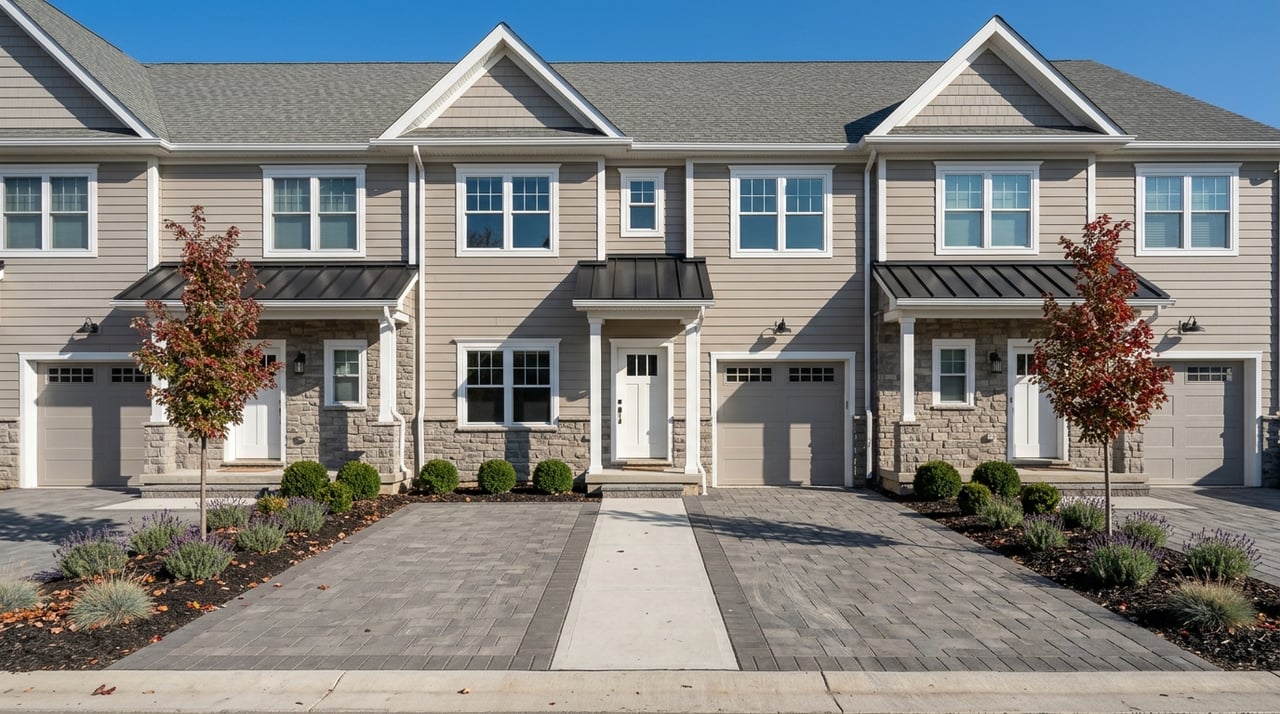
Townhomes in Boise usually feel more house-like. Current listings commonly run from 2 to 4 bedrooms and roughly 1,100 to more than 2,650 square feet. Many include attached garages, patios or courtyards, and sometimes flex rooms, offices, or guest suites.
If you work from home, want room for guests, or need more separation between living spaces, a townhome may be a better fit. You still get a lower-maintenance setup than many detached homes, but often with more space and more private-use areas.
What attached-home living really costs
Price is only one part of the equation. HOA dues can materially change your monthly cost, and Boise Regional REALTORS specifically notes that reported sales prices do not include HOA fees.
That is important because two homes with similar prices can have very different monthly ownership costs. A lower-priced condo with substantial HOA dues may end up costing more each month than you expected, while a townhome with modest dues may compare more favorably.
When you are building your budget, look at the full monthly picture:
- Mortgage payment
- Property taxes
- Homeowners insurance
- HOA dues
- Utility costs
- Parking or storage-related costs, if applicable
For condo and HOA communities, dues are often paid separately from the mortgage. You should also ask what those dues cover and whether there are any upcoming special assessments or major projects that could affect your cost after closing.
Tradeoffs to weigh before you buy
For many relocating professionals, the decision comes down to a simple question: do you want more location convenience or more private space? Boise attached homes often lean toward convenience, while detached homes often lean toward space and separation.
Here is a quick way to think about it:
| If you value... | A condo or townhome may fit | A detached home may fit |
|---|---|---|
| Easier upkeep | Yes | Sometimes |
| Central location options | Often | Less often |
| Lock-and-leave flexibility | Often | Less often |
| Large yard | Rarely | Yes |
| Fewer shared walls | Rarely | Yes |
| More square footage for the price in outer areas | Sometimes | Often |
This does not make one option better than another. It just helps match the home type to your actual routine, travel schedule, work setup, and tolerance for maintenance.
Questions to ask before making an offer
In Boise’s condo and townhome market, diligence matters. Two homes can look similar online but differ a lot in monthly cost, restrictions, and long-term upkeep.
Before you write an offer, make sure you ask about:
- HOA dues
- Reserve funds
- Special assessments
- Parking arrangements
- Storage space
- Pet rules
- Rental restrictions
- Whether the property is condo form or fee-simple townhome form
These details can shape financing, monthly affordability, and how flexible the property will be for your future plans. If you are relocating from another state, this step is especially important because the legal and practical setup may not match what you are used to seeing elsewhere.
Who is the best fit for Boise condos and townhomes
Boise condos and townhomes are often the best fit when you want ownership without taking on every part of home maintenance. They can work especially well if you travel often, want easier weekend getaways, or prefer being closer to downtown or the Greenbelt.
They may also make sense if you are relocating and want to learn Boise from a more central base before deciding whether a larger detached home is right for your long-term plans. On the other hand, if your top priorities are a large yard, more privacy, and fewer association rules, you will likely feel better served by a detached home search.
How to search smarter from out of town
If you are moving to Boise from another market, it helps to narrow your search around lifestyle first, not just price. Start by deciding whether your daily routine is more downtown-centered, river-and-trails oriented, or space-and-flexibility focused. That will usually point you toward the right neighborhoods and home type much faster.
Then compare homes based on total monthly cost, not list price alone. In a market where inventory is limited and location matters this much, the smartest search is usually the one that balances commute, upkeep, HOA structure, and how you actually want to live once you get here.
If you want help sorting through Boise condos, townhomes, and neighborhood tradeoffs, Kent Davies can help you build a search around your move timeline, budget, and day-to-day priorities.
FAQs
Are Boise condos usually cheaper than single-family homes?
- Often, yes. Boise Regional REALTORS reported November 2025 Ada County medians of $419,900 for condos and $402,950 for townhomes, compared with a February 2026 Ada County single-family median sales price of $538,000, though some premium attached homes can overlap with house pricing.
Where are most Boise condos and townhomes located?
- Boise attached homes are most concentrated in and near downtown, West Downtown, the North End, the East End, Southeast Boise, and Harris Ranch.
What is the difference between a Boise condo and a Boise townhome?
- Boise condos are often smaller and may include shared amenities and common-area ownership structures, while Boise townhomes are usually larger, more house-like, and often include attached garages, patios, or courtyards.
Do Boise condo and townhome prices include HOA fees?
- No. Boise Regional REALTORS notes that reported sales prices do not include HOA fees, so you should add those dues when comparing monthly costs.
Are Boise condos and townhomes good for relocating professionals?
- They can be an excellent fit if you want low-maintenance ownership, easy travel flexibility, and proximity to downtown or the Greenbelt.
What should you review before buying a Boise condo or townhome?
- You should review HOA dues, reserve funds, special assessments, parking, storage, pet rules, rental restrictions, and whether the property is a condo or fee-simple townhome.